~~~

Holistic Counselling and Psychotherapy – Clinical Research and Theoretical Development
Promoting awareness of ‘individual humans’ as Socialized-Body-Brain-Mind-Environment-Complexities
Directors: Dr Jim Byrne and Renata Taylor-Byrne
~~~
Research – Development – Publications
Coaching – Counselling – Psychotherapy
~~~
Homepage of the E-CENT Institute
Updated on 28th August, 2025
Adding back the body to theories of counselling and psychotherapy
The E-CENT Institute, directed by Dr Jim Byrne and Renata Taylor-Byrne, emphasizes a holistic approach to mental health, integrating body, brain, mind, and environmental factors.
Highlighting the limitations of simplistic metaphors
- like the bamboo tree for managing stress,
- or the simplistic ABC model of REBT/CBT,
the institute critiques the reductionist views prevalent in psychology and psychotherapy.
It advocates for understanding human development through a multifaceted lens that includes nutritional, sleep, and exercise sciences. Plus the analysis of narrativized emplotments of subjective social experiences. Plus affect regulation theory, and attachment theory. And it is the only truly holistic bio-psycho-social-environmental theory of human development, and the functioning of the socialized-individual body-brain-mind.
The institute explores Emotive-Cognitive Embodied Narrative Therapy (E-CENT) as a comprehensive method, encouraging practitioners to consider the complex interactions of various factors influencing mental/physical well-being. (You cannot have a healthy mind in an unhealthy body; and the effect also works in the opposite direction, from an unhealthy mind to a sick body).
~~~
Hello, and welcome!
On this page we are currently featuring a holistic – (whole body-brain-mind and lifestyle) – approach to good mental health.
Also on this website, you will find:
– A page of information about the origin and development of the Institute for E-CENT: About the E-CENT Institute.
~~~
– A page which describes the nature of Emotive-Cognitive Embodied Narrative Therapy (E-CENT): What is E-CENT Counselling?
~~~
– A page about the transition from REBT to E-CENT counselling and psychotherapy: Our journey of discovery.
~~~
For information about our Holistic SOR Model, please click this link: The Holistic SOR Model of E-CENT
~~~
And, for our site map, please check here: Site Map.
~~~
Understanding the human condition:
The body-brain-mind-environment perspective
By Jim Byrne, Executive Director
4th November 2024 – Updated on 28th August 2025
~~~
Introduction
There is a folksy American expression which goes like this:
“If it walks like a duck, has webbed feet and quacks, then it’s a duck!”
This is meant to encourage us to refrain from looking too analytically at any phenomenon which pops into our brain-mind. If the surface appearance seems okay, then it’s all okay!
A similar idea – based on the flexibility of the bamboo tree – which is less often expressed directly, but implied indirectly, is this: “If you bend in the face of the high winds of stress in your life, then you will not break!” This is a folksy, “common sense” view of how to manage stress, but in practice it is unhelpful and destructive!

We have published an extensive critique of the use of the bamboo metaphor as a way to manage stress, here: The Bamboo Paradox.***
Of course, we all have to be somewhat flexible in dealing with our lives, but there are strict limits to the extent that you should try to be like a bamboo; because you are not a bamboo!
Folksy-psychology is inaccurate “common sense”
When folksy-psychology is applied to real life situations of a serious nature, something is lost; and often great harm is done to gullible individuals.
Our critique of the bamboo, as a metaphor for human flexibility in work-stress situations is extensive, and I will not repeat any of it here. On this page I want to focus on one simple idea stemming from the misuse of the bamboo metaphor for human stress-coping capacity. And it is this:
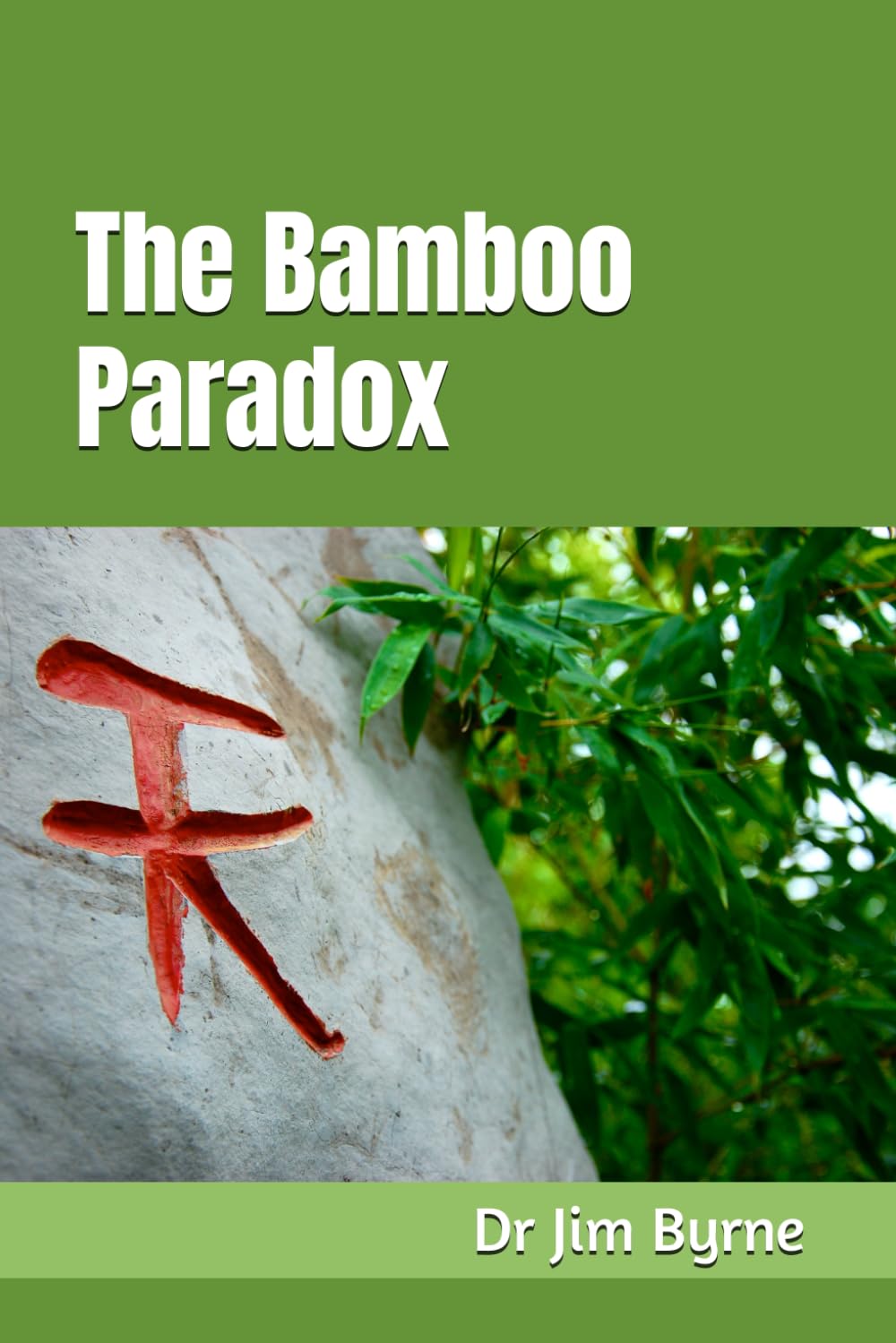 A bamboo tree is very unlike a human being, because it is rooted to the spot; and humans are not rooted to the spot. (We can get out of the storm, while the bamboo cannot do so!) Also, the use of the bamboo tree as a metaphor of human stress-coping capacity is based on the laws of physics!
Why is that a problem? Because humans are subject to many more laws than the laws of physics.
Humans are mobile, unlike trees
So let us take the example of a snowball on a hillside as a folksy-psychology model of the human condition.
Using only the laws of physics, we can say that, if Harry Smith (a basic human organism) is like a snowball, and his “thrownness” into the world, at birth, is like a snowball being thrown with force onto the soft snow at the top of a steep mountain, then Harry Smith’s life will be one in which he grows (by accumulating sticky snow) as he rolls down the mountain. His trajectory will be determined by the initial force with which he was thrown, the angle at which he was thrown, and the shape of the terrain over which he is forced to pass, with no choice!
Predicting human development

If you knew all of those factors: the initial force with which he was thrown into life on the sticky, snowy mountainside; the precise angle at which he was thrown; and all of the curves of the entire surface of the path he must inevitably follow; the stickiness of the snow; and so on; then you could predict more or less precisely…
– how big Harry Smith would be when he ran out of momentum and his (moving) life came to an end;
– how much he would weigh at that end point;
– and perhaps some additional features of his “adaptations” to his “journey”. (Unlike a bamboo tree, a snowball has a journey, which is one of the features of human development).
However, human development is governed by more than the laws of physics.
The complexity of human development and healthy functioning
We are also subject to …
– the laws of biology;
– the laws of psychology (which are softer than the laws of physics and biology);
…
At this point, most psychologists and many psychotherapists and some counsellors will throw up their arms in protest, and announce:
“But Jim, you are trying to teach your grandmother to suck eggs!”
Not really boys and girls! Because my list is not yet complete.
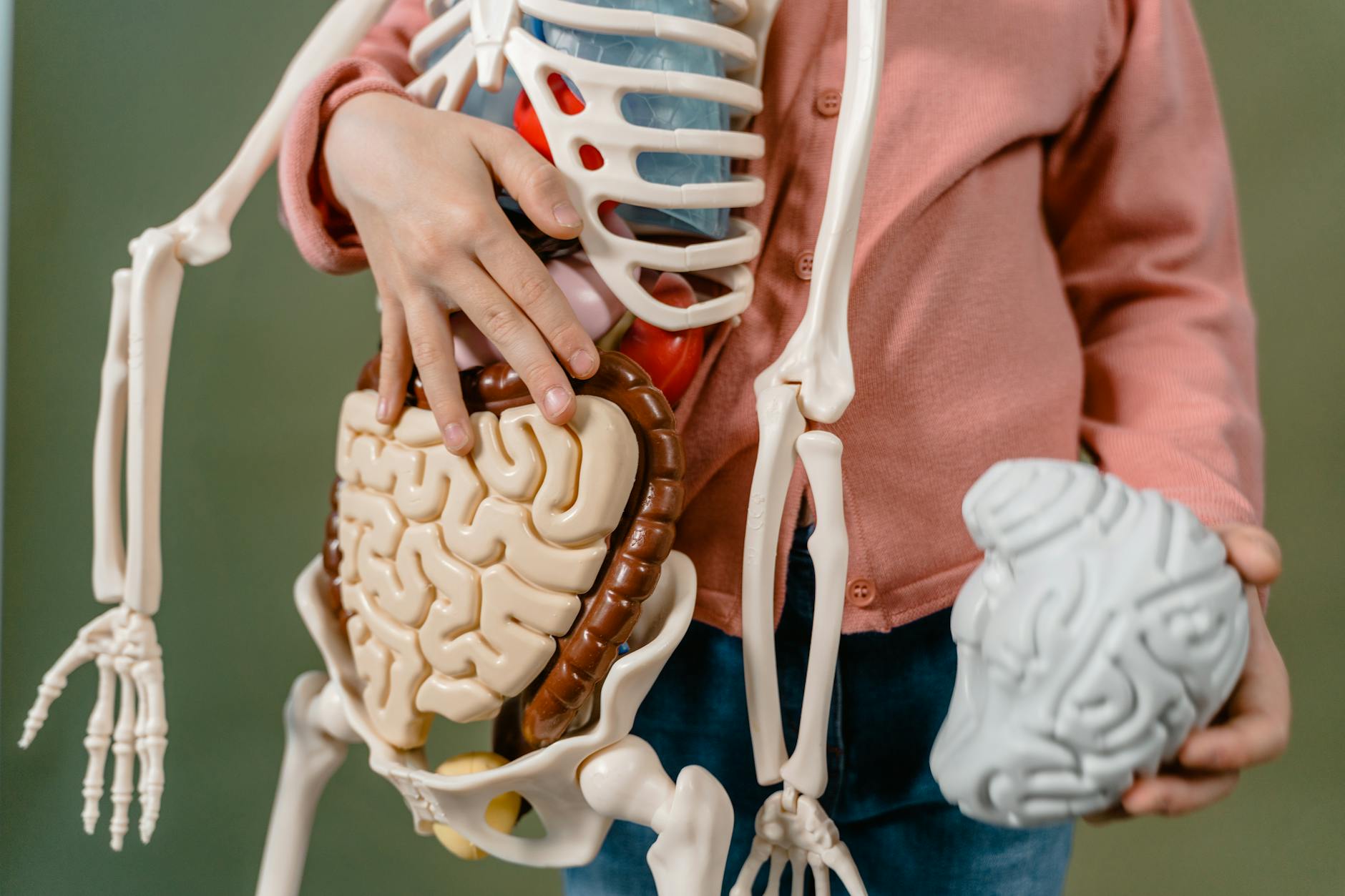
Human beings – in terms of physical and mental health, and emotional wellbeing – are also subject to ,,,
– (1) the laws of nutritional science – (You cannot maintain your sanity on a junk food diet, for example!);
– (2) the laws of sleep science – (You will experience problems of emotional control, including anger control, if you do not get enough good quality sleep every single night. Good quality sleep is a form of therapy [according to Matthew Walker 2017] in which REM sleep helps to strip out the stresses of the day)’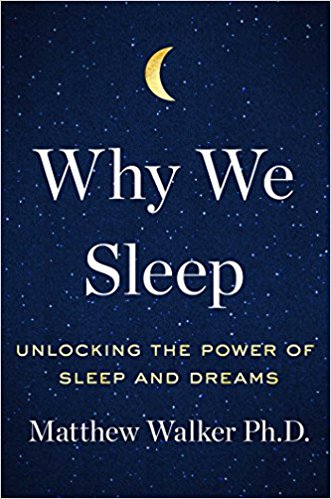
– (3) the laws of physical exercise science – (You cannot maintain good mental health if you sit on your posterior all day!);
– (4) the science of physical tension and relaxation – (A tense body will produce psychological effects, such as increased anxiety, not matter how good your philosophy of life [or ‘belief system’] happens to be!);
– and so on.
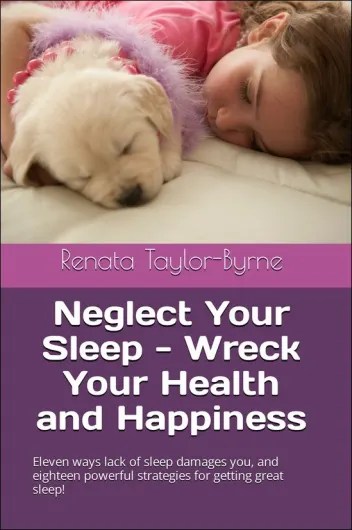 See this book on the science of sleep and mental health: “Neglect Your Sleep – Wreck Your Health and Happiness: Eleven ways lack of sleep damages you, and eighteen powerful strategies for getting great sleep!” By Renata Taylor-Byrne
Now all of the psychologists have left the room.
Why?
Because they do not want to have to learn all this difficult stuff! They would rather chat to their clients, or recommend drugs, than learn all this hard stuff!
Some of the “hard stuff” that every counsellor needs to know – given that the body and brain-mind cannot ever be separated, and that they work in unison – is contained in this book: Lifestyle Counselling and Coaching for the While Person: Or how to incorporate nutritional insights, physical exercise and sleep coaching into talk therapy.
Why should they learn it? After all, they have been ignoring the human body from the beginning of the creation of “the science of mind and behaviour”. (Okay, there are a few theorists who work on “physiological psychology”, in a limited kind of way!)
The fact that mind and behaviour are not the totality of what is involved or implicated in the maintenance of good physical and mental health is deemed irrelevant.
It has always been done like this! Each discipline has its own little marketing plan. Each discipline has its own “fishing ground” for clients.
Who cares if the system works for the clients! It pays the salaries of compartmentalized professionals!
~~~
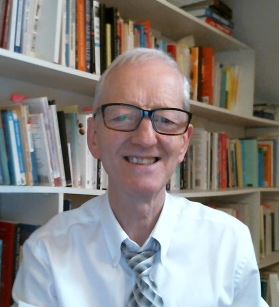 Jim Byrne, Doctor of Counselling
Executive Director
The Institute for Emotive-Cognitive Embodied Narrative Therapy (E-CENT)
4th July 2024
~~~
~~~
Hebden Bridge,
~~~
Copyright (c) Dr Jim Byrne 2024
~~~
For more information about Dr Jim Byrne, please go here: About Dr Jim Byrne.***
~~~
For more information about books written and/or co-authored by Jim Byrne, please go here: Self-help books based on E-CENT theory.***
~~~
 The Institute for Emotive-Cognitive Embodied Narrative Therapy (E-CENT)