

~~~
The Psychology of New Year Resolution creation and achievement…
The missing ingredient…
By Jim Byrne, Doctor of Counselling
Executive Director of the E-Cent Institute
Blog post dated 13th January 2026
~~~
Summary
 In his blog post, Jim Byrne discusses the psychology behind New Year’s resolutions and the factors that influence their success. He combines insights from cognitive behavioral therapy (CBT) and psychodynamic therapy, highlighting how both approaches emphasize different aspects of change: CBT focuses on goal-setting and behavioral strategies, while psychodynamic therapy dives into underlying motivations and emotional states. He also introduces the E-Cent perspective, which suggests that physical well-being – based on nutrition, sleep, and exercise – affects motivation and emotional stability. Ultimately, Dr Byrne underscores the importance of addressing both psychological and physical factors to enhance the likelihood of achieving New Year’s resolutions.
~~~
Introduction
 In this blog post, I want to review some specific aspects of the psychology of New Year Resolutions.
This ubiquitous social and cultural phenomenon is worthy of consideration, because success in the fields of counselling and psychotherapy, self-help and personal development, are significantly dependent upon changed behaviours; and changed behaviours are significantly dependent upon being able to change habitual behaviours; and the ability to change habitual behaviours is dependent upon being able to come up with the Determination to change – (according to James Prochaska and colleagues – Changing for Good). But we, at the E-Cent Institute want to add some significant insights to what Prochaska and Beck and Freud can tell us about personal change – for the New Year, and for the whole of our lives.
~~~
The CBT Perspective
 From a cognitive behavioural therapy (CBT) perspective, creating New Year’s resolutions is seen as an effort to set specific, achievable goals in order to foster positive change in one’s behaviour. CBT emphasizes the importance of identifying thought patterns and behaviours that may be holding someone back, and then systematically working to replace them with healthier alternatives. Setting resolutions can be a practical tool for self-improvement, as it encourages self-reflection and planning.
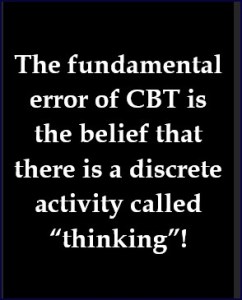
There are probably as many ideas of what CBT “is” as there are CBT therapists; but central to this approach is the idea, which echoes the Dhammapada, that, “Your life of tomorrow is determined by your thinking of today!” But that ignores what the psychodynamic perspective knows: That your so-called thinking is a function of your emotional state, which is a function of your bio-psycho-social history!
See: The Strengths and Limitations of Cognitive Behavioural Therapy (CBT) – And the case for Holistic Counselling and Therapy approaches…
~~~
The Psychodynamic Perspective
 Psychodynamic therapy approaches the question of goals and resolutions by exploring the underlying motivations and unconscious drives that may influence why a person feels compelled to make resolutions. It might consider how past experiences or unresolved conflicts shape the desire for change, and how these resolutions could reflect deeper emotional needs or internal struggles.
But as Allan Schore’s monumental research study showed; people act on the basis of their capacity to “manage their affects”, or to soothe their emotions from context to context. And their history of social attachment plays a major role in determining who they “are” and how they act.
See: The Body-Mind Connection in Psychodynamic Therapy Explained
~~~
Therefore…
Both models offer valuable insights, with CBT focusing on actionable steps and psychodynamic therapy delving into the psychological roots of the behaviour. And both models miss something significant, which I will consider further down this blog post: the E-Cent perspective.
~~~
The Statistics on New Year Resolutions
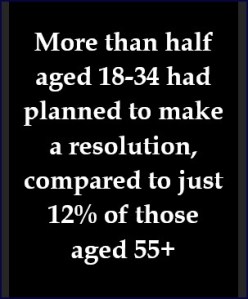 Relating these therapeutic perspectives to known statistics, research consistently shows that, while a large percentage of people – often estimated between 40% and 50% of adults in the United States (and likely a similar proportion in the UK) – set New Year’s resolutions each year, only a minority succeed in maintaining them long-term. (“Statistics from Forbes Advisor suggest around 30-40 million people in the UK planned to make a new year’s resolution in 2024. Intriguingly, more than half aged 18-34 had planned to make a resolution, compared to just 12% of those aged 55+, a statistic Manos suspects is down to older individuals having attempted and failed regularly in the past, leaving them feeling that there is no point in giving it another go.” Source: Sussex Life: https://www.greatbritishlife.co.uk/magazines/sussex/25695403.psychology-involved-new-years-resolutions/)
Studies suggest that about 20% of individuals keep their resolutions for two years, while a much larger proportion abandon them within the first few months. (But some studies suggest a high dropout rate after just two weeks!)
The CBT approach, with its emphasis on specific, realistic goal-setting and behavioural strategies, aligns well with findings that resolutions are more successful when they are clearly defined and broken into manageable steps.
Thus, both models help explain why setting resolutions is so common, yet achieving them remains challenging for many. But they miss an important dimension of the human condition, which is explored in the E-Cent perspective, below.
~~~
Other significant perspectives
(1). Positive Psychology
 Beyond cognitive behavioural therapy and psychodynamic therapy, another significant perspective on New Year’s resolutions comes from the field of positive psychology. This approach emphasizes the importance of focusing on strengths, cultivating optimism, and building positive habits rather than just correcting negative behaviours. Positive psychology suggests that framing resolutions around personal growth, well-being, and meaning can enhance motivation and satisfaction, making it more likely for individuals to sustain their goals over time.
~~~
(2). Social and cultural perspectives
 Additionally, social and cultural perspectives highlight the influence of community, traditions, and societal expectations on the practice of setting resolutions. These viewpoints consider how group norms, peer support, and shared rituals during the New Year can shape both the types of goals people set and their commitment to achieving them.
By acknowledging these broader influences, we gain a more comprehensive understanding of why New Year’s resolutions hold such enduring appeal and why their outcomes can vary widely among individuals.
~~~
Case studies in New Year’s resolutions
 The Metro newspaper, in the UK, conducted some case studies to see how individuals fared with their New Year resolutions during 2025. This was the result:
The case studies highlight a range of successful resolutions: Danni rekindled her love of reading by committing to one book a month; Sonya embraced an explorer’s mindset by traveling, learning new skills, and prioritizing her happiness; Haddy made fitness a priority by switching to a more practical gym routine and now exercises regularly; Alice mastered shuffling cards through daily practice; and Rebecca exceeded her reading goals, rediscovering the joy and benefits of books as a way to disconnect from screens and improve her well-being and work. Each person describes simple yet meaningful changes that led to lasting positive habits.
The article concludes that while setting New Year’s resolutions can be challenging and not everyone participates, those who do often find success by focusing on realistic, personally meaningful goals. These examples show that small, consistent efforts – whether reading, fitness, learning, or financial improvement – can lead to significant achievements and greater happiness over the year.
~~~
The Emotive-Cognitive Perspective (E-Cent)
The E-Cent perspective adds the following ideas, beyond the four perspectives considered above:
Your moods and emotions are affected by
- your diet and nutrition status;
…
- your sleep …
…
- and your relaxation status;
…
- and your recent history of physical activity, including exercise systems.
~~~
~~~
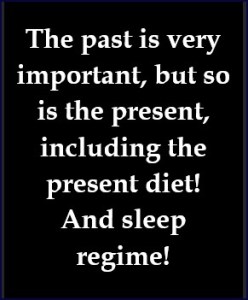
Those lifestyle factors impact the biochemistry and electrical signals within the body, and thereby they affect your thinking-feeling-perceiving-action (or what we call your “Perfinking”).
This has some unique impacts upon the process of setting and pursuing your life goals, including your New Year Resolution, as follows:
When considering these factors, it becomes clear that the physical state of your body – how well you nourish yourself, the quality of your sleep, and your level of physical activity – can either support or undermine your resolve to pursue new goals.
If, for example, your nutrition is lacking or you are sleep deprived, you may find it much harder to sustain motivation, make thoughtful decisions, or manage stress when setbacks occur.
Conversely, attending to these foundational aspects of well-being can enhance your cognitive clarity, emotional stability, and overall energy, all of which are essential for maintaining momentum as you work toward your New Year’s resolutions.
By integrating this E-Cent perspective, we see that successful goal pursuit is not just a matter of mindset or unconscious drives, but also deeply intertwined with the rhythms and needs of the body itself.
If you read any of our books, on diet, exercise, sleep, relaxation, and so on, you will be amazed by the powerful effect that changes in those lifestyle factors can have on the mental health of individuals. It is truly staggering! Here is one simple example of the power of food to change human behaviour, extracted by the latest book (in press) by Renata Taylor-Byrne:
The case study of Bob Walsh, as described by Dr. John Watson in “Nutrition and Your Mind,” illustrates how targeted nutritional supplementation can profoundly affect mental health and motivation. After Walsh returned from military service, he experienced a loss of interest in his previous passions and suffered from low energy, which was linked to a slow metabolism of food. When a placebo produced no improvement, Dr. Watson introduced a daily supplement of calcium pantothenate (vitamin B5), resulting in a dramatic boost in Walsh’s energy, creativity, and ambition. This transformation enabled Walsh to pursue his doctorate in mathematics with renewed enthusiasm and ultimately achieve greater mental ability than he had before his army service.
This is a small illustrtion of a hugely important insight. And Renata’s book will be available at the ABC Bookstore within a couple of weks!
~~~
That’s all for now.
Sincere best wishes for a peaceful and productive New Year.
Jim
Dr Jim Byrne
Doctor of Counselling
The Institute for Emotive-Cognitive Embodied-Narrative Therapy

~~~
And the ABC Bookstore Online UK
Self-help books written with dedication to the personal development of individuals everywhere
~~~
And my counselling practice is described here:

 Dr Jim Byrne discusses the challenges of changing habits and emphasizes the importance of clarity regarding the desired change, its costs, and benefits. He advocates for using the cue-routine-reward model alongside the kaizen approach for gradual change. Reflecting on his experience with Daily Pages, he acknowledges difficulties in maintaining this routine despite its benefits. Ultimately, he stresses that changing behaviour is challenging, requiring intentional effort from one’s mind and body, along with external support.
 According to Julia Cameron, and Dr James Pennebaker, there are great cognitive and emotional gains to be made from spending a few minutes each morning writing out our stream of consciousness – our thoughts, feelings, reflections, plans for the day, worries and goals and so on.
 I recently resolved to make the Daily Pages a daily habit for the rest of my life, because of the obvious advantages. On 20th April I constructed a list of the Benefits of writing my Daily Pages – three pages of stream of consciousness – and the Costs of not writing those pages.
 It is really hard to learn new ideas, and to change old habits. We have to review them over and over and over again. This most likely results from what I call ‘frozen schemas’: packets of knowledge or information from the past which are resistant to change. The best illustration I can think of is the resistance of a racist’s schemas for race-related information. No amount of positive information about a minority ethnic person seems to dissolve the prejudices of a racist. A similar phenomenon is found with nationalism, tribalism, sexism, religious intolerance, homophobia, etc.So if we want to change and grow, we have to keep reviewing our habitual behaviours (which reveal [by implication or inference] our habitual thoughts-feelings-attitudes). Then we have to work very hard, and intelligently, to change those behaviours-thoughts-feelings-attitudes.
 When I decided to construct a list of the Benefits of writing my daily pages, every day, I was using the language and logic based functions of my left frontal lobe. When I sit down each morning, and review those lists of Benefits and Costs, I am operating from my wilful, intentional, left frontal lobe, and the upper region of my left OFC. And slowly, slowly, the upper region of my left OFC is influencing the lower, more emotional region of my left OFC.
 However, since I cannot see inside my own brain-mind, in order to corroborate any of these conclusions, I must also ask: Is there any other possible explanation for my strange (apparently self-sabotaging) behaviour this morning, after 12 days of success?
 Because I want you to understand how hard it is – how difficult – to change any human behaviour. I want you to understand just how intentional and determined you have to be if you want to change yourself and your life! The right limbic system, the right OFC, and the lower regions of the left OFC will all resist the brave and determined actions of your left frontal lobe and the upper region of your left OFC!
 The Institute for Emotive-Cognitive Embodied Narrative Therapy (E-CENT)